
Kerala Food Guide: 25 Traditional Dishes You Must Try in God's Own Country
Why Kerala Food Is Unlike Anything Else in India
Kerala food is the taste of a coastline that traded with the world for two thousand years. Long before European explorers reached India, ships from Rome, Arabia, and China anchored along the Malabar coast for one reason: black pepper, cardamom, cinnamon, ginger, and cloves. That spice trade didn't just make Kerala wealthy — it shaped every plate you'll eat here today.
What makes Kerala cuisine instantly recognisable is a small handful of ingredients used with extraordinary skill: coconut in every form (oil, milk, cream, freshly grated), curry leaves crackled in hot oil, tamarind and raw mango for sourness, rice as the anchor of almost every meal, and a spice cabinet that reads like a history of world trade.
This guide walks you through the 25 dishes that define Kerala food — from the ceremonial Sadya feast to the humble puttu-and-kadala breakfast eaten in every household. If you're planning a trip to God's Own Country, these are the plates worth travelling for.
The Backbone: Rice, Coconut, and Spice
Before we get to specific dishes, understand the three ingredients that unite them all:
- Rice: Kerala grows short-grained red rice (Matta rice) that's nuttier and more nutritious than white rice. It shows up as steamed grains, ground into puttu and appam batter, flattened into ada, and cooked down into payasam.
- Coconut: A single Kerala kitchen might use coconut oil for frying, coconut milk for gravies, freshly grated coconut for garnishes, and coconut water for drinking — all in the same meal.
- Spices: Black pepper (the "king of spices"), green cardamom, cinnamon, cloves, star anise, mustard seeds, fenugreek, and dried red chillies form the aromatic base of nearly every curry.
1. Sadya — The Feast on a Banana Leaf
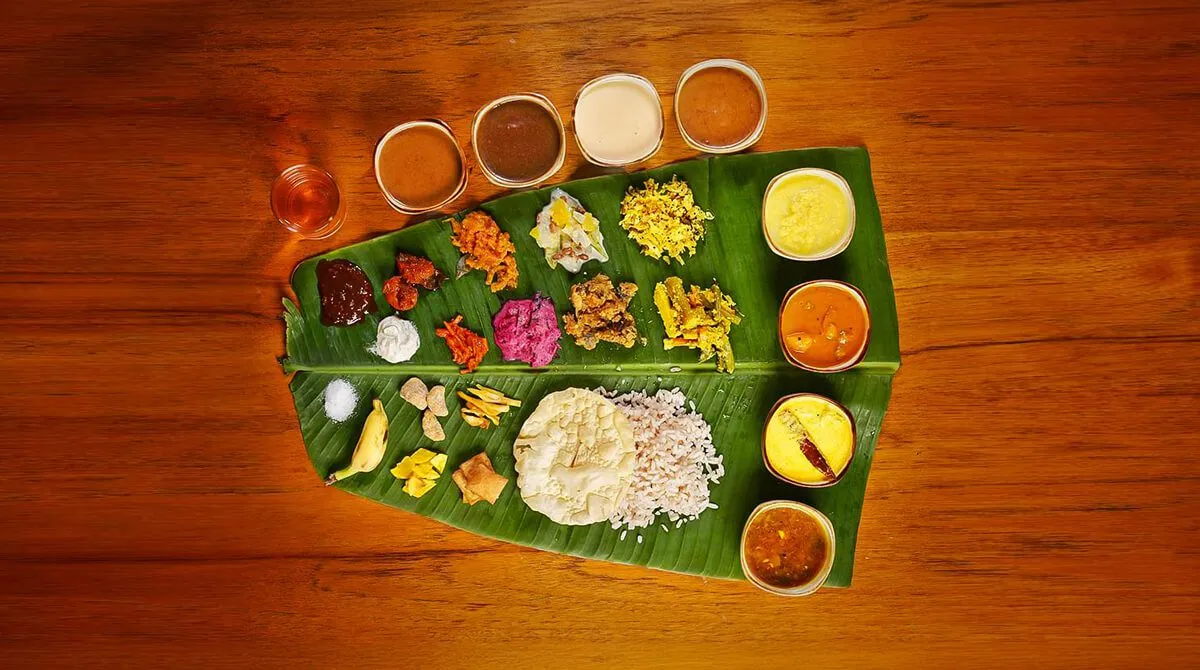
If you eat only one meal in Kerala, make it a Sadya. This is the state's grand vegetarian feast, traditionally served during Onam and Vishu but available year-round at good restaurants.
A proper Sadya includes 24 to 28 dishes arranged in a strict order on a banana leaf: rice in the centre, pickles and crunchy sides on the top-left, curries on the top-right, payasam (dessert) served midway through, and everything eaten with your right hand. Highlights include Sambar, Avial, Kalan, Olan, Thoran, Erissery, Pachadi, and multiple Payasams.
Where to try it: Any traditional restaurant in Thiruvananthapuram, Kottayam, or Thrissur — especially during Onam (August–September).
2. Malabar Biryani (Thalassery Biryani)
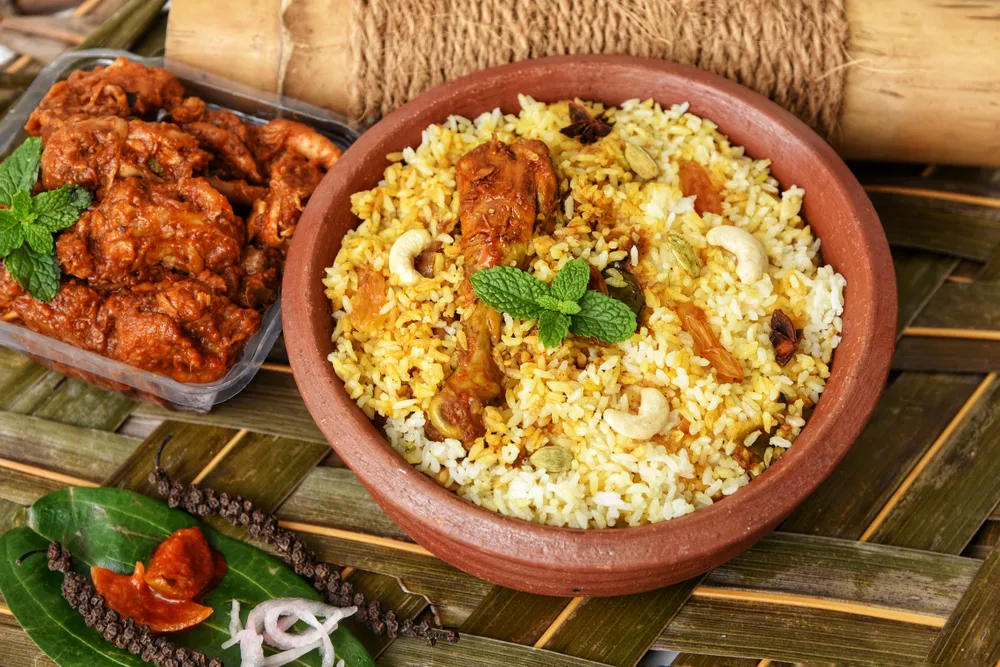
Kerala's answer to Hyderabadi biryani is subtler, sweeter, and made with a completely different rice. Thalassery biryani uses tiny, aromatic khyma (jeerakasala) rice instead of basmati, cooked separately from the meat and then layered with fried onions, cashews, raisins, and rose water.
The Malabar coast's Arab trading history shows here — the technique of dum cooking and the sweet-savoury balance both trace back to centuries of exchange with Yemen and Oman.
3. Appam with Stew

The classic Kerala Christian breakfast. Appam is a lacy, bowl-shaped pancake made from fermented rice batter and coconut milk — crispy at the edges, soft and spongy in the middle. It's paired with ishtu (stew): chicken, mutton, or vegetables simmered in coconut milk with whole spices, ginger, and green chillies. No red chilli, no turmeric — just white, fragrant, and comforting.
4. Puttu and Kadala Curry
The everyday Kerala breakfast. Puttu is steamed cylinders of ground rice layered with grated coconut, cooked in a bamboo or metal mould. It's paired with Kadala curry — black chickpeas in a roasted coconut and spice gravy. Together they're filling, cheap, and eaten in almost every home from Kasaragod to Thiruvananthapuram.
5. Karimeen Pollichathu

The signature dish of the Kerala backwaters. Karimeen (pearl spot fish) is marinated in a fiery red masala of chilli, ginger, garlic, and shallots, then wrapped in a banana leaf and pan-grilled. The leaf perfumes the fish while sealing in the spice paste. Order it on any houseboat cruise in Alleppey or Kumarakom — it's non-negotiable.
6. Fish Moilee (Meen Moilee)
Kerala's Portuguese-influenced fish curry. Chunks of firm white fish — usually seer fish or pomfret — poach gently in a mild coconut milk gravy with turmeric, green chillies, ginger, and curry leaves. It's the polar opposite of a fiery Meen Curry — pale yellow, creamy, and elegant.
7. Nadan Meen Curry (Red Fish Curry)
The everyday Kerala fish curry, cooked in a traditional clay pot (manchatti) with Kudampuli (Malabar tamarind), red chilli, coconut, and curry leaves. It's tangy, spicy, and tastes even better the next day. Kappa (tapioca) is its traditional partner.
8. Kappa and Meen Curry
Boiled tapioca mashed lightly with turmeric, salt, and grated coconut, served alongside the red fish curry above. This is Kerala's ultimate comfort food — rustic, cheap, and beloved from fishermen's shacks in Kollam to upscale restaurants in Kochi.
9. Beef Ularthiyathu (Kerala Beef Fry)
Slow-cooked beef with thin coconut slices, curry leaves, black pepper, and coconut oil, reduced until dark, dry, and intensely flavoured. Best eaten with parotta or Kerala porotta — a combination that's essentially the state's unofficial national dish.
10. Kerala Parotta
Not to be confused with North Indian paratha. Kerala's parotta is a flaky, layered flatbread made from refined flour, stretched thin, coiled into a spiral, and cooked on a griddle. Tear it apart with your hands and dip it into beef fry, chicken curry, or vegetable kurma.
11. Chicken Varutharacha (Nadan Kozhi Curry)
The word varutharacha means "roasted and ground" — the coconut is dry-roasted until dark brown before being blended with the masala, giving this chicken curry its deep colour and almost smoky flavour. A staple at Kerala Christian and Hindu households alike.
12. Prawn Moilee (Chemmeen Moilee)
Prawns in the same mellow coconut milk gravy as fish moilee — a Syrian Christian speciality from the Kochi and Alleppey regions. Best with appam.
13. Idiyappam with Egg Curry
Also called "string hoppers" — fine rice noodles pressed into nests and steamed. They're delicate, almost silky, and pair beautifully with a spicy egg curry, chicken curry, or coconut milk sweetened with jaggery for breakfast.
14. Avial
The most famous dish of the Sadya. A mix of at least seven vegetables (drumsticks, yam, raw banana, snake gourd, carrot, beans, ash gourd) cooked with coconut, green chillies, cumin, and finished with coconut oil and curry leaves. Legend credits its invention to Bhima during the Pandavas' exile.
15. Thoran
A dry stir-fry of finely chopped vegetables — cabbage, beans, beetroot, or unripe jackfruit — tossed with grated coconut, mustard seeds, curry leaves, and dried red chilli. Simple, quick, and present at every Kerala lunch.
16. Erissery
A thick pumpkin-and-lentil curry with a roasted coconut tempering. Sweet, earthy, and comforting — a Sadya essential.
17. Sambar (Kerala Style)
Kerala's sambar is thicker and less sour than the Tamil version, with more vegetables and a hit of coconut in the masala. Ladled generously over rice as the first course of a Sadya.
18. Manga Curry (Raw Mango Curry)
Summer-only. Chunks of raw mango cooked in coconut milk with mustard, fenugreek, green chillies, and turmeric. Tangy, slightly sweet, and served with rice.
19. Chatti Pathiri
A Malabar layered "pancake pie" — thin crepes stacked with a spiced meat or sweet coconut filling, then baked. Often called "Kerala's lasagna". A Ramadan speciality in Kozhikode.
20. Pathiri
Soft, disc-shaped rice flatbreads from the Malabar region. Pair with chicken curry, mutton stew, or fish curry.
21. Palada Payasam

Rice ada (flakes) simmered in milk and sugar for hours until thick, creamy, and pale pink. The signature Onam dessert.
22. Ada Pradhaman
The "king of payasams" — rice ada cooked in jaggery and coconut milk, garnished with fried cashews, raisins, and coconut chips. Darker, richer, and more festive than Palada.
23. Unniyappam
Small round fritters of rice flour, jaggery, ripe banana, and cardamom, deep-fried in coconut oil. A traditional temple offering — buy them fresh at Guruvayur and Sabarimala.
24. Banana Chips (Ethakka Upperi)
Wafer-thin slices of raw Nendran banana fried in coconut oil and lightly salted. Kerala's most exported snack — buy them in Kozhikode or from any bakery in the state.
25. Kozhikodan Halwa
Glossy, chewy, jewel-coloured halwa made with wheat flour, ghee, sugar, and cashews. A speciality of Kozhikode's Mittai Theruvu ("Sweet Street"). Try the black halwa — flavoured with dark jaggery.
The Spice Heritage: Why Kerala Cooks the Way It Does
You cannot understand Kerala food without understanding the spice trade. For 2,000 years, the Malabar coast supplied the world with black pepper. Roman gold coins have been dug up in Kerala. Arab dhows brought back cardamom to Cairo and Constantinople. Vasco da Gama sailed here in 1498 specifically to break the Arab monopoly on Kerala's pepper.
That history left permanent marks on the cuisine:
- Syrian Christian cooking (Kottayam, Kochi) inherited techniques from West Asian traders — hence the coconut-milk stews and use of vinegar.
- Mappila (Malabar Muslim) cuisine around Kozhikode and Kannur shows Arab influence in biryanis, ghee rice, and layered pastries.
- Portuguese arrival in the 1500s brought chillies, cashews, and pineapple — none of which existed in India before.
- Dutch and British traders left behind baking traditions still alive in Kochi's Fort Kochi bakeries.
Regional Differences in Kerala Food
Kerala is small but its cuisine varies dramatically by region:
- Malabar (North Kerala): Thalassery biryani, pathiri, chatti pathiri, Kozhikodan halwa — Arab and Mappila influences dominate.
- Central Kerala (Kochi, Thrissur): Syrian Christian classics — appam with stew, meen moilee, duck roast, and elaborate Sadyas.
- South Kerala (Thiruvananthapuram, Kollam): More vegetarian Brahmin cooking, spicier fish curries, and the state's best banana chips.
- Backwater region (Alappuzha, Kumarakom): Karimeen pollichathu, toddy shop food, duck curries, and fresh riverine fish.
Where to Eat Kerala Food
Toddy shops (Kallu Shaap): Do not skip these. Rustic thatched-roof shacks serving fresh coconut palm toddy and the fieriest fish curries, duck fry, and beef ularthiyathu in the state. The best are around Alleppey, Kottayam, and Thrissur.
Traditional restaurants: Look for boards saying "Meals Ready" — that's your ticket to a full Kerala lunch on a banana leaf for under ₹200.
Homestays: The single best way to eat authentic Kerala food. Book a family-run homestay in Fort Kochi, Munnar, or Wayanad and ask for home-cooked meals. See our hotel and homestay guide for recommendations.
Festivals: Time your visit to Onam (August–September) for the year's grandest Sadyas, or Ramadan for Malabar iftar spreads.
Practical Tips for Eating in Kerala
- Eat with your right hand. Especially for Sadya — cutlery genuinely dulls the experience.
- Fold the banana leaf towards you after eating to signal you enjoyed the meal (folding away means the opposite).
- Ask for spice levels. Kerala food can be intensely hot; most places will tone it down if asked.
- Try the tender coconut water everywhere — it's the best hangover cure and hydration source in a tropical climate.
- Vegetarians are well looked after. Sadya is entirely vegetarian, and every restaurant has extensive veg menus.
Plan Your Kerala Food Trip
The best food trail through Kerala roughly follows: Kozhikode (Malabar biryani, halwa) → Kochi (Syrian Christian food, seafood) → Alleppey (karimeen, toddy shops) → Kottayam (beef fry, duck roast) → Thiruvananthapuram (Sadya, banana chips). Give yourself at least 10 days.
For a full itinerary, see our Kerala travel itineraries, and browse our complete Kerala cuisines gallery for photos and details of every dish mentioned above.
Final Thoughts
Kerala food is generous in the way Kerala people are generous — nothing held back, flavours turned up loud, coconut and spice used without apology. Whether you eat a Sadya on your first day or spend two weeks working through every dish on this list, you'll leave understanding why food in God's Own Country isn't a side attraction. It's the main event.
 Translate