
Places to Visit in Ernakulam District
Kerala's commercial capital featuring historic Fort Kochi, backwater islands, and a vibrant cosmopolitan culture.
Nearest Airport
Cochin International Airport (COK)
Nearest Railway
Ernakulam Junction / Ernakulam Town
Population
32.82 lakh
Area
3,068 sq km
About Ernakulam District
Ernakulam (Kochi): Kerala's Cosmopolitan Port City, Where Three Thousand Years of Trade History Still Shows
Every major empire that ever went looking for pepper found its way to this stretch of the Kerala coast. Romans, Arabs, Chinese traders, Portuguese explorers, Dutch merchants, and British colonizers all left something behind in the place now known as Kochi — a city so layered in overlapping histories that walking from Fort Kochi to Mattancherry to the modern Ernakulam waterfront is essentially a tour through every era of Indian maritime trade compressed into a few square kilometers. Ernakulam is the mainland commercial district that anchors modern Kochi; Fort Kochi and Mattancherry are the older colonial waterfront neighborhoods that most visitors come specifically to see. Together they make up one of the most historically dense, visually distinctive, and practically well-connected cities in South India.
This guide covers the layered history behind the city, the key attractions and what makes each worth visiting, how to use the Water Metro that now connects the whole area, how to get there from the US or anywhere in India, and a complete FAQ addressing the practical questions first-time visitors need answered.
Quick Facts Before You Go
- Location: Ernakulam district, Kerala, on the southwestern coast of India along the Arabian Sea
- The Kochi distinction: Kochi refers to the broader city; Ernakulam is the mainland commercial district; Fort Kochi and Mattancherry are the older colonial waterfront neighborhoods on a separate peninsula
- Distance from Cochin International Airport: About 25–44 km to central Ernakulam or Fort Kochi respectively, generally 45 minutes to 1.5 hours by road
- Best months: October to February
- Ideal duration: 2–3 days to cover Fort Kochi, Mattancherry, Ernakulam waterfront, and at least one day-trip
- Transport highlight: India's first Water Metro, launched in 2023, connects 10 islands and major points across the harbor on 15 routes — the most practical and scenic way to move around
- Famous event: Kochi-Muziris Biennale, Asia's largest contemporary art festival, held across Fort Kochi, Mattancherry, and Ernakulam every two years (most recent edition: December 2025 – March 2026)
The History: Three Thousand Years in One Harbour
Muziris — The Ancient Port That Preceded Kochi
The story of this coastline doesn't start with the Portuguese in the 1500s, even though that's where most tourist histories begin. About 30 km north of modern Kochi lay Muziris, an ancient port mentioned in Ashoka's edicts as Keralaputra and described in Roman and Greek texts as one of the busiest trading ports in the known world in the 1st century BC. Roman ships rode the monsoon winds here to load black pepper and cardamom; Greek, Jewish, Arab, and Chinese traders all passed through. Spice was essentially the oil of the ancient economy, and Muziris was a major valve in that system. In 1341 AD, a catastrophic flood caused by a shift in the Periyar River's course buried Muziris under sediment and sea, destroying the port almost overnight. The harbor that opened up to the south as a result — the natural harbor around modern Kochi — became the successor trading location, setting the stage for everything that followed.
The Portuguese (1500s)
Vasco da Gama arrived on the Malabar Coast in 1498, completing the first direct sea route from Europe to India. He returned to Kochi in 1502, and the Portuguese quickly established a trading post and fort here — Fort Manuel, which gave Fort Kochi its name. In 1510, they built St. Francis Church, the oldest European church in India, where Vasco da Gama was buried after his death in Kochi in 1524. His remains were later repatriated to Portugal, but the tombstone remains. The Portuguese also built the Mattancherry Palace in 1555 — later given to the Raja of Kochi as a goodwill gesture — and established the first European colonial presence on the Indian subcontinent in this city.
The Dutch (1663–1795)
The Dutch East India Company drove out the Portuguese in 1663 and took control of Kochi, renovating several structures including the Mattancherry Palace (which is why it's also commonly called the Dutch Palace) and establishing a cemetery that still survives at Fort Kochi. Dutch control lasted until 1795, when British forces took over.
The British (1795–1947) and Modern Kochi
Under British rule, Kochi developed into one of South India's major commercial ports, with infrastructure built on Willingdon Island — an artificial island created from harbor dredging — to handle growing trade volumes. At independence in 1947, Kochi was integrated into the state of Travancore-Cochin, and later into Kerala when the state was formed in 1956. The port remains one of India's largest and most active today, alongside a growing technology and services economy that makes modern Ernakulam a genuinely bustling commercial city rather than simply a heritage tourism stop.
Key Attractions
Fort Kochi Neighborhood
The old colonial waterfront peninsula is where most first-time visitors spend the majority of their time, and for good reason — the combination of Portuguese-era streets, Dutch-era buildings, Chinese fishing nets on the waterfront, and heritage art spaces gives it a texture found nowhere else in India.
Chinese Fishing Nets (Cheena Vala)
The iconic giant cantilevered fishing nets on the Fort Kochi waterfront, introduced to the region by traders from the court of Kublai Khan, are still operated by local fishermen and have become the city's most-photographed landmark. The best time to photograph them is at sunrise or sunset, when the light catches the nets and the water behind them.
St. Francis Church (Built 1510)
The oldest European church in India, originally built by Portuguese Franciscan friars and later taken over by the Dutch and then the British. Vasco da Gama was buried here in 1524; his tombstone remains in the church though his remains were moved to Lisbon 14 years later. The church is architecturally simple but historically extraordinary — open daily except Sundays during service hours.
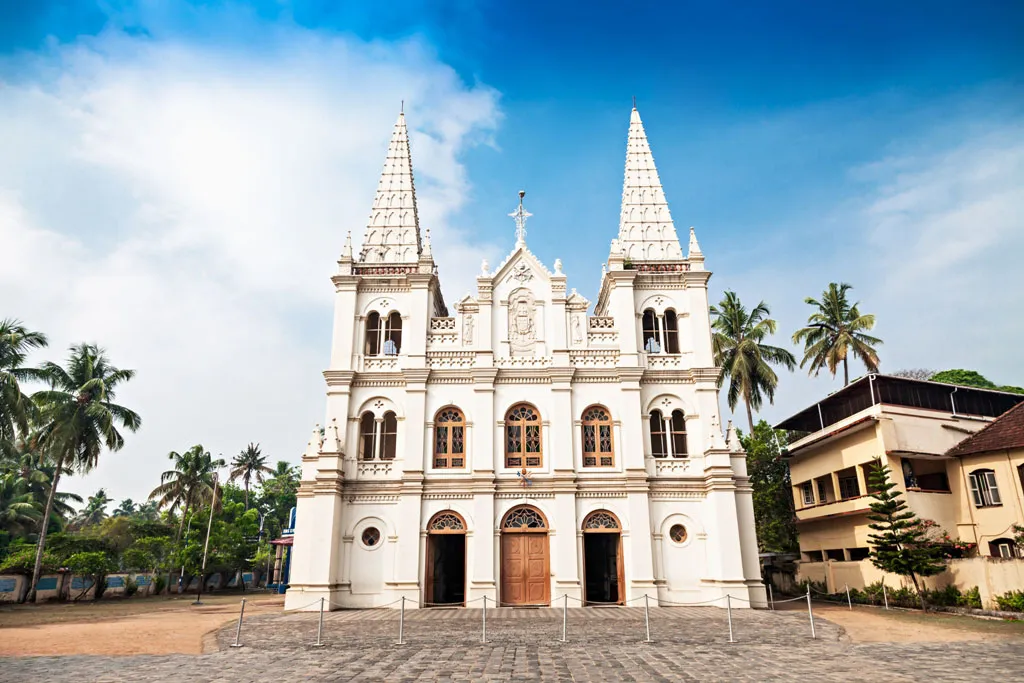
Santa Cruz Cathedral Basilica
Originally built by the Portuguese in 1557 and later raised to a Cathedral by Pope Paul IV, the current structure dates from 1905 and is known for its Indo-Gothic architecture and pastel interiors. One of only eight Basilicas in India.
Mattancherry Palace (Dutch Palace)
Built by the Portuguese in 1555 and gifted to the Raja of Kochi, later renovated by the Dutch in 1663. The palace is best known for its extraordinary mural paintings — among the finest examples of Kerala's traditional mural art — depicting scenes from the Ramayana and Mahabharata. The flooring, made traditionally from burnt coconut shells, lime, charcoal, and egg white, has a finish that looks like polished black marble. Open Sunday to Friday, 9:45 AM to 1:00 PM and 2:00 PM to 4:45 PM; closed Saturdays. Entry fee is ₹2 per adult, free for children under 15.
Paradesi Synagogue (Built 1568)
Built in 1568 by the Sephardic Jewish community that settled in Kochi, making it one of the oldest active synagogues in the Commonwealth. Famous for its hand-painted blue-and-white Chinese floor tiles, each slightly different, and its antique Belgian glass chandeliers. Open Sunday to Friday, 10:00 AM to 12:00 PM and 3:00 PM to 5:00 PM; closed Saturdays and Jewish holidays.
Jew Town and Mattancherry Spice Market
The lane running from the Paradesi Synagogue through Mattancherry is one of the most atmospheric streets in Kerala — antique shops, spice warehouses, and art galleries stacked side by side in buildings that have been here for centuries, with the smell of cardamom, pepper, and cinnamon carrying through the whole street.
Hill Palace Museum
Located at Tripunithura, about 12 km from central Ernakulam, this is Kerala's largest archaeological museum — the former royal residence of the Kochi Maharaja, built in 1865 across 52 acres of grounds. The complex includes sculptures, coins, ancient manuscripts, weapons, royal portraits, and ornaments from the Kochi royal family, alongside a deer park and landscaped gardens. Open Tuesday to Sunday, 9:00 AM to 12:30 PM and 2:00 PM to 4:30 PM; closed Mondays.
Kerala Kathakali Centre
Fort Kochi's most reliable venue for watching Kathakali — Kerala's classical dance-drama form, performed in elaborate costumes and dramatic makeup. The centre runs regular evening performances with a pre-show makeup demonstration that gives context to the extraordinary visual language of the form. One of the best places in India to experience this art form up close.
Marine Drive, Ernakulam
The mainland Ernakulam waterfront promenade along the harbor, popular for evening walks with views across the water to Fort Kochi and Willingdon Island. A good spot for street food, people-watching, and the nightly ferry activity across the harbor.
Cherai Beach
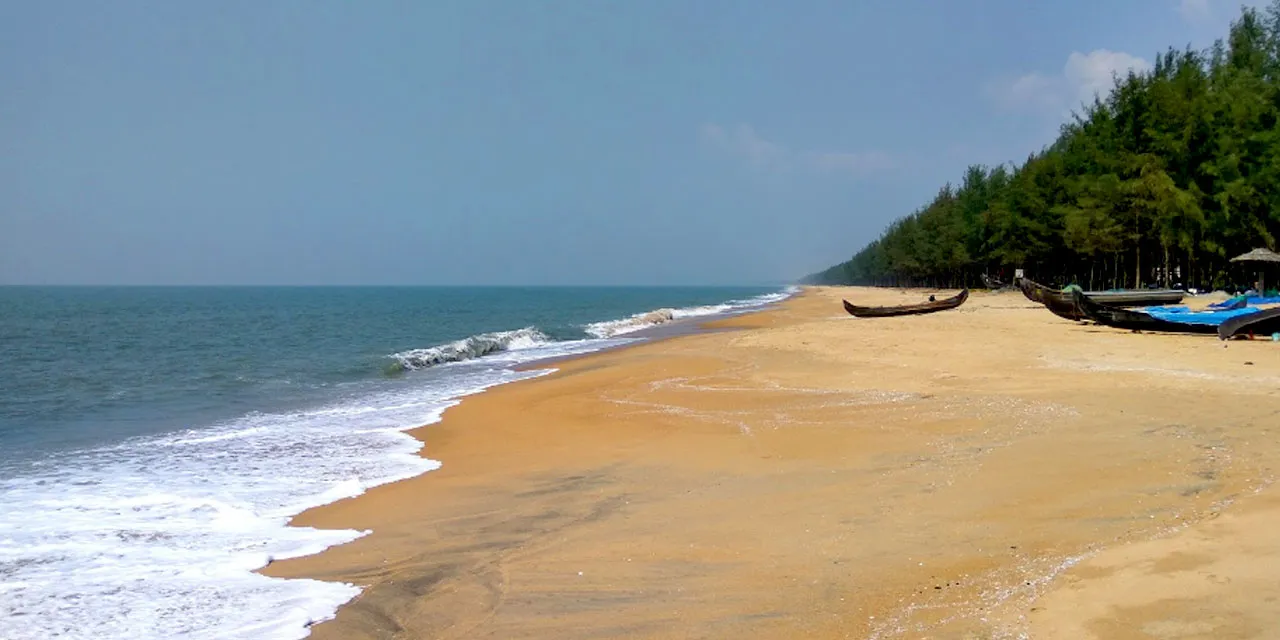
About 25–30 km from central Ernakulam on the northern tip of Vypeen Island (accessible by Water Metro or ferry from Fort Kochi), Cherai is widely considered one of Kerala's best beaches for actual swimming — clean, long, with a unique position where the Arabian Sea and the backwaters meet behind a narrow strip of sand. A good alternative to the non-swimming backwater canals of Alappuzha if your itinerary needs a beach day.
Kochi-Muziris Biennale
Asia's largest contemporary art festival, held every two years across Fort Kochi, Mattancherry, Willingdon Island, and Ernakulam venues. The 6th edition (December 2025 – March 2026) has now closed as of mid-2026; the next edition dates have not yet been announced by the Kochi Biennale Foundation. If your visit falls during a future edition, it's worth building your entire Kochi trip around it — the Biennale uses repurposed warehouses, historic courtyards, and colonial-era buildings across the city as exhibition venues, turning the whole waterfront into a single sprawling art experience.
Getting Around: The Water Metro
India's first Water Metro, launched in 2023 and now running 15 routes across the Kochi harbor, has genuinely transformed how visitors move between Ernakulam, Fort Kochi, Mattancherry, Willingdon Island, and Vypeen Island. Air-conditioned electric ferries run on a schedule and are far more comfortable and reliable than the older passenger ferries, at a fraction of the cost of taxis or auto-rickshaws across the same distances. For any visitor staying in Ernakulam but wanting to spend time in Fort Kochi and Mattancherry — which is most visitors — loading a Kochi1 metro card and using the Water Metro is the smartest logistical decision you can make.
Getting to Ernakulam / Kochi
From the United States
Cochin International Airport (COK) is one of India's busier international airports, with connections from major hubs via Dubai, Doha, Abu Dhabi, Singapore, and other transfer points, making it more accessible from the US than most South Indian cities.
- From the airport: About 25 km to central Ernakulam, 41–44 km to Fort Kochi; generally 45 minutes to 1.5 hours by taxi depending on traffic.
- Pre-paid taxi counters at the airport offer the most reliable and transparent pricing for the journey into the city.
By Train
Ernakulam has two major railway stations — Ernakulam Junction (South) and Ernakulam Town (North) — both well connected to Chennai, Bengaluru, Mumbai, Delhi, Thiruvananthapuram, Kozhikode, and other major cities. The stations are in the mainland Ernakulam area; reaching Fort Kochi from the station requires a taxi, auto-rickshaw, or Water Metro connection.
By Road
NH 66 connects Kochi northward to Kozhikode and southward toward Alappuzha and Thiruvananthapuram. NH 544 connects Kochi to Coimbatore and beyond to the east. Regular buses run from major South Indian cities, and Kochi is a manageable self-drive destination for those comfortable with Kerala road conditions.
Best Time to Visit
- October to February: The ideal window — cool, pleasant weather, low humidity, and the peak tourism season with the best range of cultural activities and events.
- December to March: If the Kochi-Muziris Biennale is running (it operates every two years on a December–March schedule), this is by far the best time to visit for culturally-minded travelers.
- Onam (August–September): Kerala's harvest festival brings vibrant cultural performances, traditional feasts, and decorative flower carpets (pookalam) to the city — a lively but humid time to visit.
- April to June: Hot and humid; manageable but not ideal for extended walking tours of Fort Kochi's outdoor attractions.
- Monsoon (June–September): Heavy rain, but Fort Kochi's colonial lanes and covered heritage spaces remain accessible, and the city is significantly less crowded.
Building an Itinerary Around Ernakulam / Kochi
Day 1: Fort Kochi and Mattancherry
- Morning: Chinese fishing nets and St. Francis Church, walk the Fort Kochi heritage lanes
- Midday: Mattancherry Palace murals, Paradesi Synagogue, Jew Town spice market and antique shops
- Evening: Kathakali performance at Kerala Kathakali Centre, sunset at the Fort Kochi waterfront
Day 2: Ernakulam Mainland and Water Metro
- Morning: Hill Palace Museum at Tripunithura
- Afternoon: Marine Drive waterfront walk, Ernakulam shopping (Broadway market or Lulu Mall for contrast)
- Evening: Water Metro ride across the harbor at dusk — one of the best value experiences in the city
Day 3: Day-Trip Options
- Cherai Beach via Water Metro to Vypeen Island for a proper swimming beach
- Athirappilly Waterfalls, about 75 km east via Chalakudy — Kerala's largest waterfall and a popular day trip
- Alappuzha Backwaters, about 60 km south — easily combined if you're spending more than 2 nights in the region
Frequently Asked Questions
What is the difference between Ernakulam and Kochi?
Kochi is the broader city and the name most visitors know. Ernakulam is the mainland commercial district that forms the urban core of the city. Fort Kochi and Mattancherry are older colonial waterfront neighborhoods on a separate peninsula connected by ferry and Water Metro. Most visitors stay in either Ernakulam or Fort Kochi and use ferries or the Water Metro to move between them.
What is Kochi most famous for?
Its extraordinarily layered colonial history — Portuguese, Dutch, and British all left substantial architectural and cultural marks — combined with a unique multicultural character that includes one of the oldest Jewish communities in India, Syrian Christian churches dating to the 1st century AD according to local tradition, and a thriving contemporary art scene centered around the Kochi-Muziris Biennale.
What is the nearest airport?
Cochin International Airport (COK), about 25 km from central Ernakulam and 41–44 km from Fort Kochi. It's one of India's better-connected international airports, with frequent onward flights from major Gulf and Southeast Asian hubs.
How far is Kochi from the US, and how do I get there?
There are no direct flights from the US to Kochi. The typical route involves flying from a US gateway city to a hub such as Dubai, Doha, Abu Dhabi, or Singapore, then connecting to Cochin International Airport (COK). Total travel time from the US East Coast is typically 20–26 hours depending on connection times.
What is the Water Metro and should I use it?
India's first Water Metro, launched in 2023, is a network of air-conditioned electric ferries connecting Ernakulam, Fort Kochi, Mattancherry, Willingdon Island, Vypeen Island, and other points across the Kochi harbor on 15 routes. It's fast, comfortable, affordable, and genuinely the best way to move around the city. Load a Kochi1 metro card at any Water Metro terminal to use the system.
Is Fort Kochi walkable?
Yes, the Fort Kochi heritage area is compact enough to explore almost entirely on foot. The Chinese fishing nets, St. Francis Church, Santa Cruz Basilica, and the main colonial streets are all within easy walking distance of each other. Mattancherry is a short tuk-tuk or auto-rickshaw ride (or Water Metro hop) from Fort Kochi.
What are the entry fees for major attractions?
Mattancherry Palace charges ₹2 per adult (free for children under 15). The Paradesi Synagogue has a small entry fee. St. Francis Church and Santa Cruz Basilica are free to enter. Hill Palace Museum has modest entry fees. The Chinese fishing nets are free to walk up to and photograph from the waterfront path.
When is the Kochi-Muziris Biennale?
It's held every two years from roughly December through March. The 6th edition ran from December 12, 2025 to March 31, 2026, and has now closed. The Kochi Biennale Foundation has not yet announced dates for the 7th edition as of mid-2026 — check their official website (kochimuzirisbiennale.org) for updates before planning a trip around it.
Is Kochi good for families with children?
Yes. The combination of a walkable heritage waterfront, ferry rides across the harbor, the Hill Palace deer park, Cherai Beach, and cultural shows like Kathakali gives families a genuinely varied itinerary without needing to plan every hour around kids.
Can I swim at Kochi's beaches?
Fort Kochi Beach is not recommended for swimming due to harbor currents and water quality. Cherai Beach on Vypeen Island, accessible by Water Metro, is a much better option for actual swimming — clean, long, and well regarded.
What is the best time of year to visit?
October through February for the most comfortable weather and the widest range of cultural activities. December through March is especially recommended if the Kochi-Muziris Biennale is running in that cycle.
What is the best time of day to see the Chinese fishing nets?
Sunrise or sunset, when the light is dramatic and the nets are typically being operated by fishermen. Midday light is flat and the crowds are heavier.
How many days should I spend in Kochi?
Two full days covers Fort Kochi, Mattancherry, and the Ernakulam waterfront comfortably. Three days allows you to add a day trip — Cherai Beach, Athirappilly Waterfalls, or Alappuzha backwaters — without feeling rushed.
Where should I stay — Ernakulam or Fort Kochi?
Fort Kochi gives you immediate walkable access to the heritage area, heritage hotels in colonial buildings, and a quieter, more atmospheric atmosphere. Ernakulam offers a wider range of budget hotels, better shopping, and easier access to train stations and major transport hubs. With the Water Metro connecting both sides efficiently, either works well depending on your priorities.
What should I eat in Kochi?
Karimeen pollichathu (pearl spot fish wrapped in banana leaf and grilled) is the local specialty you'll find recommended everywhere. Kerala fish curry, prawn moilee, appam with stew, and puttu with kadala curry are other staples worth trying. Mattancherry's Jew Town lanes have several small cafés with fresh seafood and local snacks at reasonable prices.
Is Kochi safe for solo travelers?
Yes, Kochi is generally considered one of the safer and more traveler-friendly cities in South India, with a well-established tourism infrastructure, reliable public transport, and a cosmopolitan, multilingual character that makes navigating the city relatively straightforward for first-time visitors to India.
The Takeaway
Ernakulam and Kochi don't ask you to choose between history and the present — they've been folding new chapters on top of old ones for three thousand years and haven't stopped yet. The Chinese fishing nets on the waterfront, the Paradesi Synagogue in Mattancherry, the Kerala murals inside a palace the Portuguese built and the Dutch renovated, and the Water Metro gliding past all of it on electric ferries — it's the same harbor, just a different century every few hundred meters. Give yourself at least two full days, load a Water Metro card the moment you arrive, and leave Ernakulam itself for the evenings — the heritage, as always, is on the water side of the city.
 Translate